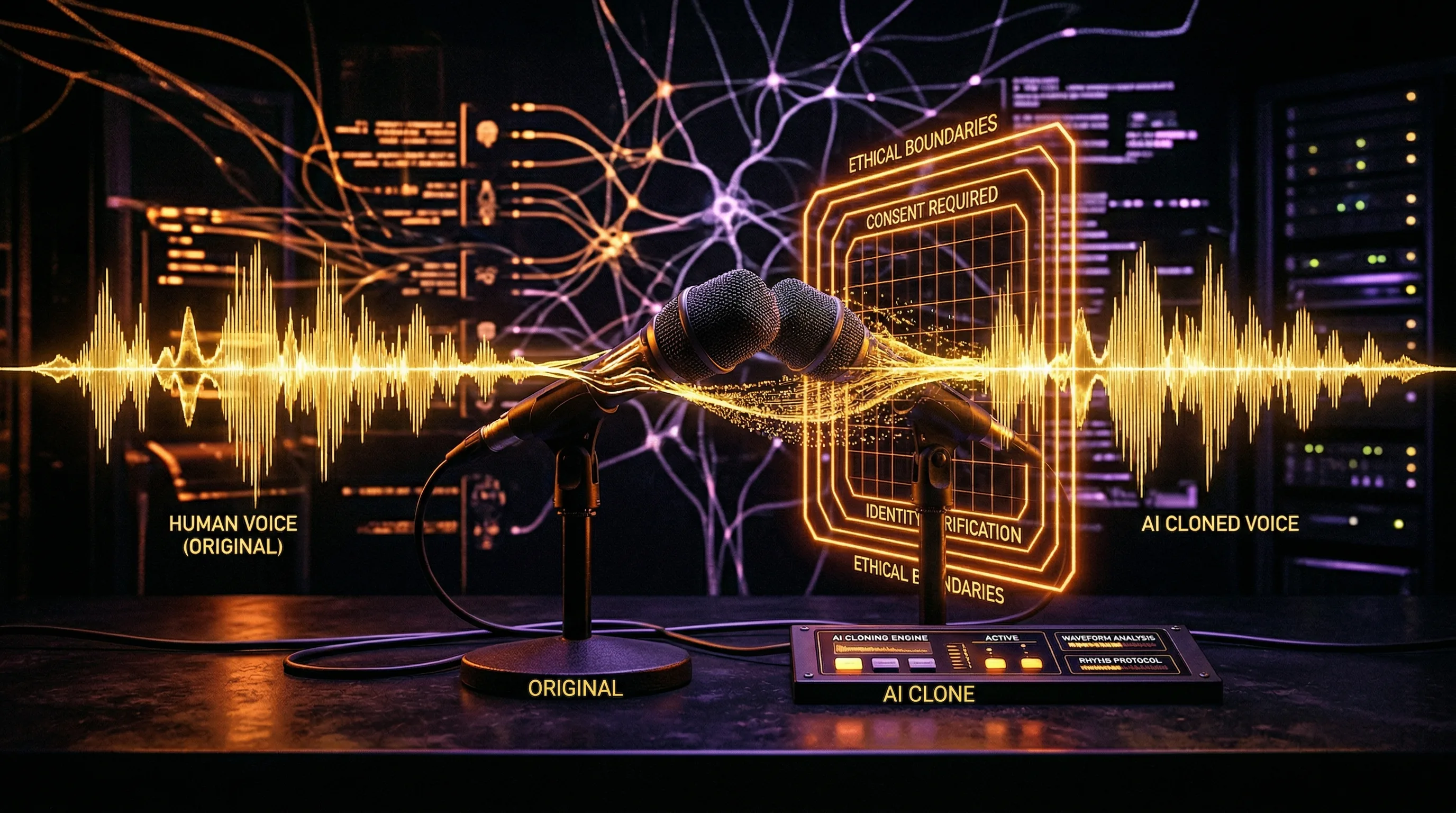
AI Voice Cloning: Legal Risks, Ethical Concerns, and Safe Usage Guidelines
AI voice cloning can replicate anyone's voice from a short audio sample. This creates powerful creative possibilities and serious legal risks. Here's what creators need to know about using voice AI responsibly. This topic matters more than most creators realize.

The Artifio editorial team publishes research, tutorials, and release notes covering image, video, and audio generation models. All posts are reviewed by an editor before publishing.
AI voice cloning can replicate anyone's voice from a short audio sample. This creates powerful creative possibilities and serious legal risks. Here's what creators need to know about using voice AI responsibly.
This topic matters more than most creators realize. The decisions you make here affect not just your current projects but your long-term professional standing, your legal exposure, and the trust your audience places in your work. Taking the time to understand these concepts thoroughly pays dividends in every piece of content you create going forward.
Legal Issues with AI Voice Cloning
Right of Publicity and Voice Rights
Using someone's voice without permission may violate their right of publicity This is a critical consideration for creators who want to stay ahead of the curve. Understanding these dynamics helps you make better decisions about your content strategy, protect your work, and build sustainable practices that withstand legal scrutiny and audience expectations as the AI space continues evolving rapidly.
Consent is required for voice cloning in most jurisdictions This is a critical consideration for creators who want to stay ahead of the curve. Understanding these dynamics helps you make better decisions about your content strategy, protect your work, and build sustainable practices that withstand legal scrutiny and audience expectations as the AI world continues evolving rapidly.
Consent Requirements
Using someone's voice without permission may violate their right of publicity This is a critical consideration for creators who want to stay ahead of the curve. Understanding these dynamics helps you make better decisions about your content strategy, protect your work, and build sustainable practices that withstand legal scrutiny and audience expectations as the AI market continues evolving rapidly.
Consent is required for voice cloning in most jurisdictions This is a critical consideration for creators who want to stay ahead of the curve. Understanding these dynamics helps you make better decisions about your content strategy, protect your work, and build sustainable practices that withstand legal scrutiny and audience expectations as the AI scene continues evolving rapidly.
Deepfake Regulations
Using someone's voice without permission may violate their right of publicity This is a critical consideration for creators who want to stay ahead of the curve. Understanding these dynamics helps you make better decisions about your content strategy, protect your work, and build sustainable practices that withstand legal scrutiny and audience expectations as the AI space continues evolving rapidly.
Consent is required for voice cloning in most jurisdictions This is a critical consideration for creators who want to stay ahead of the curve. Understanding these dynamics helps you make better decisions about your content strategy, protect your work, and build sustainable practices that withstand legal scrutiny and audience expectations as the AI world continues evolving rapidly.
Safe Voice AI Usage
Using Your Own Voice
Cloning your own voice is the safest option legally This is a critical consideration for creators who want to stay ahead of the curve. Understanding these dynamics helps you make better decisions about your content strategy, protect your work, and build sustainable practices that withstand legal scrutiny and audience expectations as the AI market continues evolving rapidly.
Many platforms offer pre-made voices with commercial licenses This is a critical consideration for creators who want to stay ahead of the curve. Understanding these dynamics helps you make better decisions about your content strategy, protect your work, and build sustainable practices that withstand legal scrutiny and audience expectations as the AI scene continues evolving rapidly.
Licensed and Stock Voices
Cloning your own voice is the safest option legally This is a critical consideration for creators who want to stay ahead of the curve. Understanding these dynamics helps you make better decisions about your content strategy, protect your work, and build sustainable practices that withstand legal scrutiny and audience expectations as the AI space continues evolving rapidly.
Many platforms offer pre-made voices with commercial licenses This is a critical consideration for creators who want to stay ahead of the curve. Understanding these dynamics helps you make better decisions about your content strategy, protect your work, and build sustainable practices that withstand legal scrutiny and audience expectations as the AI world continues evolving rapidly.
Custom AI Voices from Consenting Speakers
Cloning your own voice is the safest option legally This is a critical consideration for creators who want to stay ahead of the curve. Understanding these dynamics helps you make better decisions about your content strategy, protect your work, and build sustainable practices that withstand legal scrutiny and audience expectations as the AI market continues evolving rapidly.
Many platforms offer pre-made voices with commercial licenses This is a critical consideration for creators who want to stay ahead of the curve. Understanding these dynamics helps you make better decisions about your content strategy, protect your work, and build sustainable practices that withstand legal scrutiny and audience expectations as the AI scene continues evolving rapidly.
Artifio's audio AI models offer various voice options with clear usage rights — create professional audio content with confidence.
Ethical Considerations Beyond Legal Requirements
Even with consent, consider the context and potential for misuse Building this effectively requires a systematic approach that balances efficiency with quality. Many creators overlook this aspect, but those who address it proactively find themselves in a much stronger position both legally and professionally.
Transparency about synthetic voices builds trust Putting in place this effectively requires a systematic approach that balances efficiency with quality. Many creators overlook this aspect, but those who address it proactively find themselves in a much stronger position both legally and professionally.
Avoid creating content that could deceive about who is speaking Rolling out this effectively requires a systematic approach that balances efficiency with quality. Many creators overlook this aspect, but those who address it proactively find themselves in a much stronger position both legally and professionally.
For a in-depth overview, see our complete guide to this topic area.
Related reading: explore related guidance on this topic for additional insights and practical frameworks.
Related reading: explore related guidance on this topic for additional insights and practical frameworks.
For authoritative reference, see the SAG-AFTRA AI voice protection resources — Performer union guidance on AI voice rights and protections.
Voice AI in Specific Industries
Different industries face different voice AI challenges. In podcasting and media, AI voice cloning enables content creators to produce episodes more efficiently, create multilingual versions of content, and maintain consistent narration when the original speaker is unavailable. However, media organizations need clear policies about when AI voices are acceptable and when human narration is required for authenticity and trust.
In education and training, AI voices power interactive learning materials, language learning apps, and accessibility tools. The educational use case is generally lower-risk legally, but institutions should still establish clear policies about AI voice usage in course materials, assessments, and student-facing content. Transparency about AI voice usage in educational contexts maintains institutional credibility.
In corporate communications, AI voice technology enables companies to produce internal training videos, onboarding materials, and announcement content at scale. Using AI voices for internal communications carries lower legal risk than external commercial use, but companies should still establish policies governing which communications use AI voices and how that usage is disclosed to employees. Building consistent voice AI policies now prevents ad-hoc decisions that create inconsistency and potential compliance issues later.
In accessibility applications, AI voice technology provides enormous value — text-to-speech for visually impaired users, personalized voice assistance for people with speech disabilities, and multilingual communication support. These applications generally enjoy broader legal acceptance due to their accessibility benefits, but creators should still make sure they're using properly licensed voice technology and meeting applicable accessibility standards.
The voice AI landscape is changing rapidly, with new capabilities emerging alongside new legal frameworks. Creators who establish responsible voice AI practices now — consent-based workflows, clear disclosure habits, and ethical usage guidelines — will be well-positioned as both the technology and the regulations mature. The investment in responsible voice AI practices today protects your reputation and legal standing while the rules are still forming. Building these habits early is much easier than retrofitting compliance after problems emerge.
Frequently Asked Questions
Is AI voice cloning legal?
Cloning your own voice is generally legal. Cloning others' voices without consent raises right of publicity and potentially deepfake law issues. Consent is essential for any voice cloning of another person.
Do I need consent to clone someone's voice?
Yes. Using someone's voice without consent may violate their right of publicity and applicable deepfake regulations. Get written consent before cloning any voice that isn't your own.
Can I use AI voices for commercial content?
Yes, if you have proper rights: your own voice, licensed AI voices, or voices cloned with consent. Check your platform's terms for commercial usage rights on AI-generated audio.
Are there laws about AI voice deepfakes?
Increasingly, yes. Many jurisdictions have passed or are passing laws specifically addressing synthetic voice content. These typically require consent and/or disclosure. Check your local regulations.
How do I disclose AI voice in my content?
Add a note: 'This content features AI-generated voice narration' or similar disclosure. For video, include it in the description. For podcasts, mention it in the episode notes.
Create professional audio content responsibly. Explore Artifio's voice AI models with clear usage rights and transparent terms. Get started with Artifio today.