How to Read AI Platform Reviews: Spotting Fake Reviews, Sponsor Bias, and Real Insights
That "10 Best AI Content Tools for 2026" article you just found on Google? There's a 90% chance it's affiliate content — the author earns a commission when you click through and subscribe. The rankings don't reflect quality. They reflect which platforms pay the highest commissions.

The Artifio editorial team publishes research, tutorials, and release notes covering image, video, and audio generation models. All posts are reviewed by an editor before publishing.
That "10 Best AI Content Tools for 2026" article you just found on Google? There's a 90% chance it's affiliate content — the author earns a commission when you click through and subscribe. The rankings don't reflect quality. They reflect which platforms pay the highest commissions. Understanding how the AI review ecosystem actually works is essential for making informed platform decisions, and this guide gives you the tools to separate genuine insights from paid promotion.
Let's be clear: this blog exists on an AI platform's website. We have our own bias. But what we can do is teach you to evaluate all sources critically — including us — and make decisions based on your own testing rather than anyone's marketing.
The Problem with AI Platform Reviews
Affiliate and Sponsor Bias
The economics of AI review content create structural bias. Most "best of" articles are monetized through affiliate links — the author earns a percentage of any subscription purchased through their links. This creates three predictable distortions: platforms with higher affiliate commissions rank higher (regardless of quality), positive features are emphasized while limitations are downplayed, and the overall tone is promotional rather than critical.
This isn't necessarily dishonest — many affiliate reviewers genuinely try to be helpful. But the financial incentive fundamentally conflicts with objective evaluation. When someone earns money from recommending a platform, their recommendation is not neutral. According to FTC endorsement guidelines, affiliate relationships should be clearly disclosed, but many review sites bury disclosures in fine print or omit them entirely.
Outdated Information
AI platforms change rapidly. Features launch, models update, pricing shifts, and interfaces redesign — sometimes monthly. A review written six months ago may describe a fundamentally different product than what exists today. Quality changes are particularly common: a model that was best-in-class in January may have been surpassed multiple times by July.
Always check the publication date on any review. Reviews older than three to six months should be treated as potentially obsolete. If the review doesn't have a date, assume it's outdated — trustworthy sources date their content.
Review Farming and Fake Reviews
Some platforms actively incentivize positive reviews: offering credits, extended trials, or discounts in exchange for reviews. Others engage in more aggressive tactics — buying bulk reviews on review platforms or creating fake accounts to post favorable ratings.
The result: inflated ratings that don't reflect actual user experience. A platform with a 4.8/5 rating on a review site may have a very different reputation in honest community discussions. The rating number alone tells you almost nothing about actual quality.
How to Identify Trustworthy Reviews
Red Flags for Fake or Biased Reviews
Watch for these signals that a review may not be genuine:
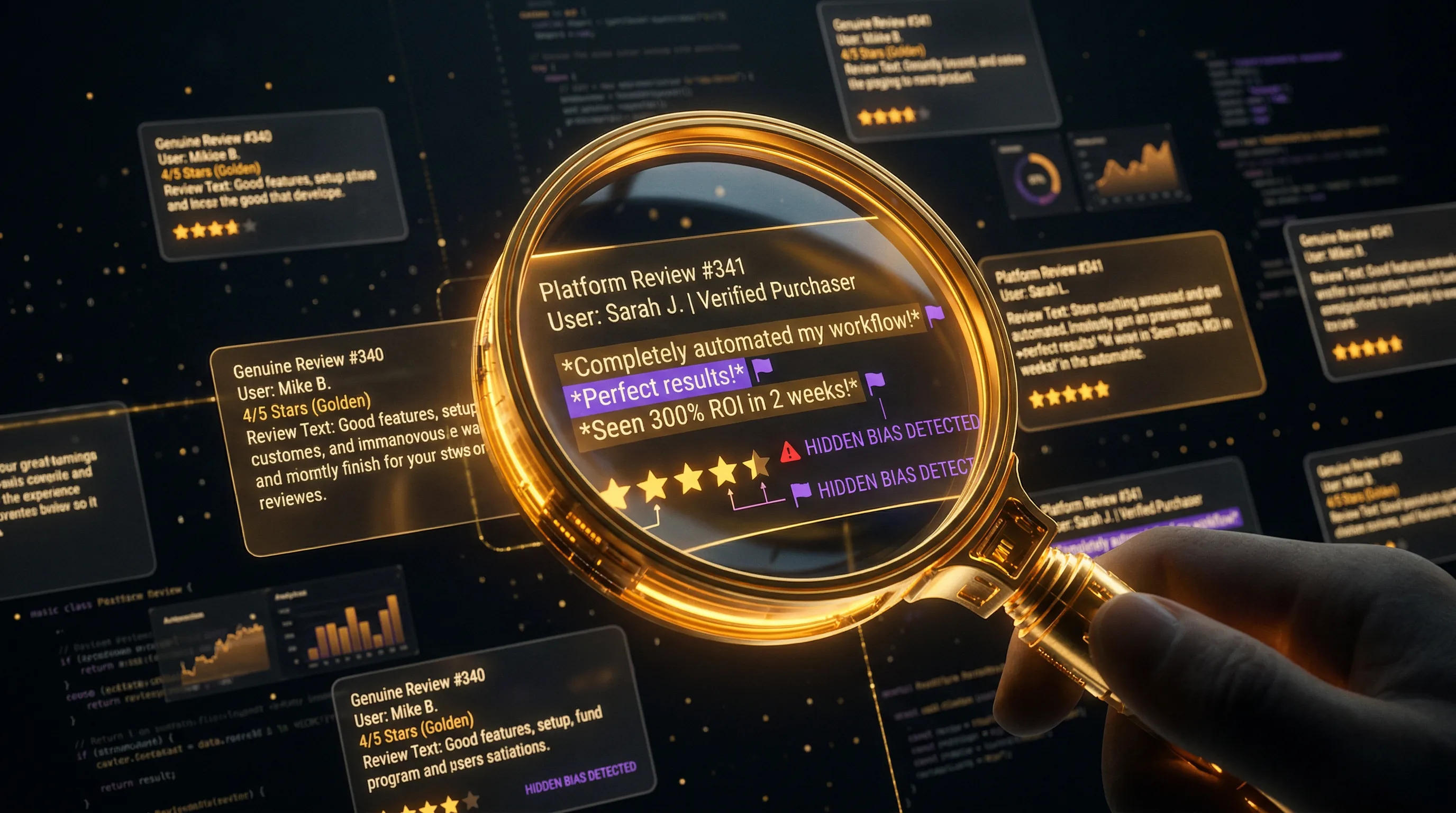
- No specific details: "This tool is amazing and changed my workflow!" without explaining what content they create or how specifically it helped
- Suspiciously positive: No mention of any limitations, downsides, or areas for improvement. Every product has weaknesses — reviews that omit them aren't honest.
- Identical phrasing across reviews: If multiple reviews use the same unusual phrases, they may come from the same source
- Reviewer has no history: A reviewer with one review (this platform) and no other review history is likely incentivized or fake
- Marketing language: Reviews that read like ad copy — using the platform's own marketing phrases — are likely not from genuine users
Green Flags for Genuine Reviews
Trustworthy reviews tend to share these characteristics:
- Specific use cases: "I use this for product descriptions for my Shopify store" tells you the reviewer has actual experience
- Balanced assessment: Honest pros AND cons. Even the best platforms have limitations worth mentioning.
- Dated content: The reviewer states when they used the platform, acknowledging that things change
- Comparison context: "I switched from [another tool] because..." indicates genuine evaluation
- Author with credibility: A reviewer with a history of balanced, detailed reviews across multiple products
For structured platform evaluation you can trust, see our AI platform comparison framework and pre-purchase checklist.
Where to Find Honest Reviews
The most honest AI platform opinions tend to live in community spaces rather than commercial review sites:
- Reddit communities: Subreddits dedicated to AI tools, content creation, and specific use cases. Users share genuine experiences including frustrations.
- Industry-specific forums: Copywriter forums, e-commerce seller communities, podcaster groups. Peers share what actually works.
- X (Twitter) discussions: Real-time conversations where users vent about problems and celebrate wins with specific platforms.
- Professional communities: Slack groups, Discord servers, and LinkedIn groups where practitioners discuss their actual tool stacks.
In these spaces, people share genuine experiences because their reputation in the community matters more than any affiliate commission.
Beyond Reviews: How to Evaluate Platforms Yourself
Here's the truth that no review can replace: your own testing is more valuable than anyone else's opinion. Reviews help you build a shortlist of platforms to evaluate. Your testing determines which platform you choose.
The process:
- Read reviews to identify 2-3 promising platforms
- Sign up for free trials on all of them
- Test with your actual production prompts
- Score quality, cost, and experience objectively
- Choose based on your data, not anyone's recommendation
Artifio encourages hands-on testing over review-reading. Try our 100+ models with your actual prompts and let your experience decide. We're confident in what testing will reveal — which is why we'd rather you test than take our word for it.
Reviews are a starting point. Testing is the decision. Don't confuse the two, and you'll make better platform choices than 90% of buyers who subscribe based on the first "best of" article they find. See our AI platform red flags guide for what to watch for during your testing.
Frequently Asked Questions
Can I trust AI platform reviews?
Be skeptical of 'best of' lists and suspiciously positive reviews. Look for reviews with specific use cases, balanced perspectives, and recent dates. Community forums and subreddits tend to be more honest than commercial review sites.
How do I spot fake AI tool reviews?
Red flags: generic praise without specifics, no mention of downsides, identical phrasing across reviews, unusually high ratings, and reviews that read like marketing copy. Genuine reviews include specific use cases and balanced assessments.
What's the best way to evaluate AI platforms?
Test them yourself. Use the free trial with your actual prompts at your expected volume. Your direct experience is more valuable than any review. Reviews can help narrow your initial shortlist, but testing makes the final decision.
Are AI comparison websites trustworthy?
Most are affiliate-driven, meaning they earn commissions from recommendations. They're useful for discovering options but not for unbiased evaluation. Always verify claims with your own testing.
Where can I find honest AI platform opinions?
Reddit communities, industry-specific forums, X/Twitter discussions, and professional communities. These spaces tend to have more candid opinions than commercial review sites. Look for discussions, not just ratings.
Test, Don't Just Read
Skip the reviews and test for yourself. Artifio's free trial gives you hands-on access to 100+ models — because your experience matters more than anyone's opinion. The best buying decision is the one informed by your own data.