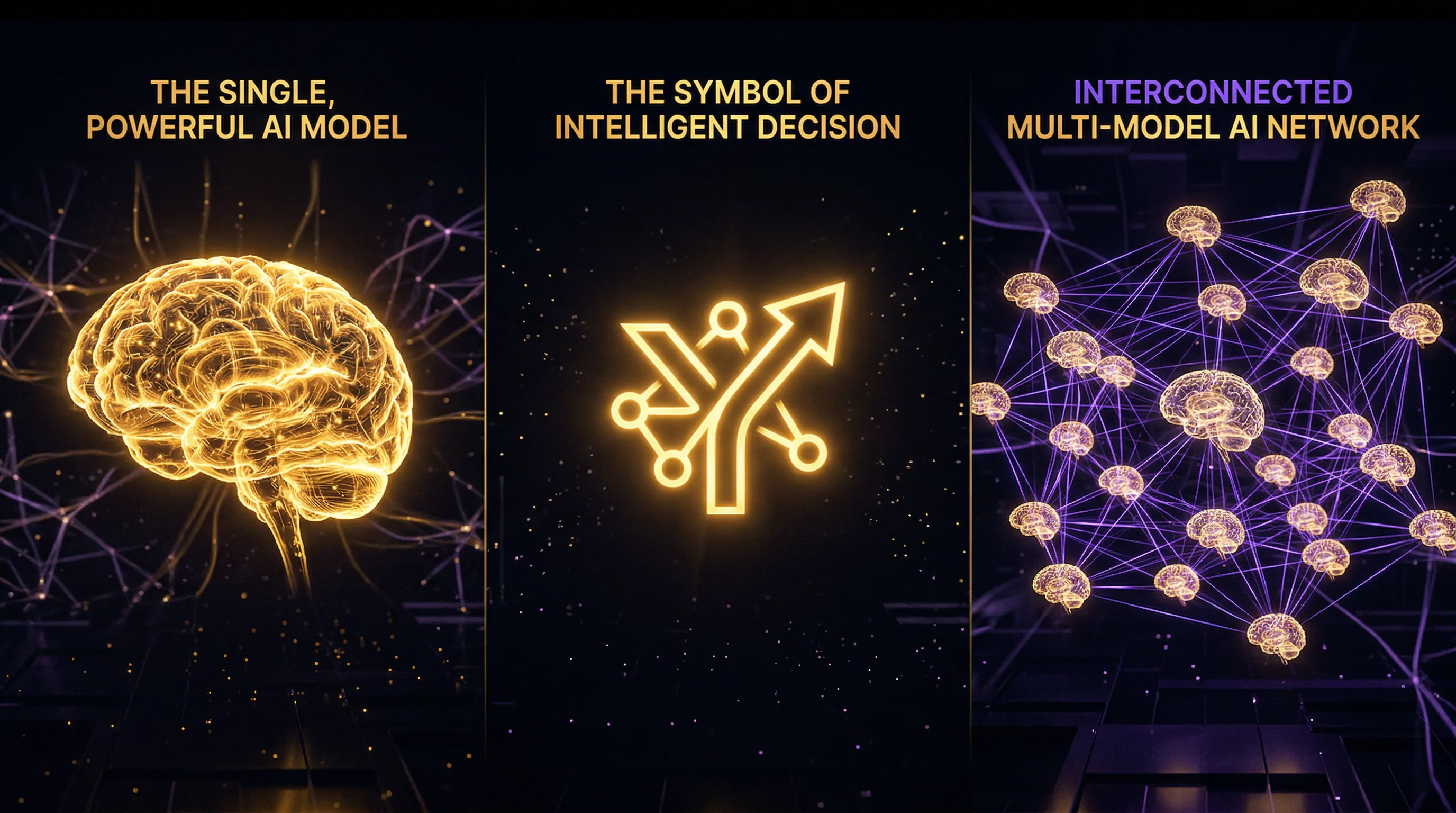
Single-Model vs. Multi-Model AI Platforms: Which Approach Is Right for You?
The AI platform market is splitting into two camps: platforms built around a single proprietary model and platforms that aggregate multiple models from different providers.

The Artifio editorial team publishes research, tutorials, and release notes covering image, video, and audio generation models. All posts are reviewed by an editor before publishing.
The AI platform market is splitting into two camps: platforms built around a single proprietary model and platforms that aggregate multiple models from different providers. For most content creators, the multi-model approach has clear and measurable advantages — but single-model platforms have their place for specific use cases. Here's the honest breakdown to help you decide which approach fits your workflow.
Understanding this architectural difference is critical because it affects your output quality, cost structure, risk exposure, and long-term flexibility in ways that aren't obvious from marketing pages.
Single-Model Platforms
Advantages: Simplicity and Deep Integration
Single-model platforms offer a simpler experience. One model, one interface, one set of capabilities to learn. The platform can build deep integration with that model — custom workflows, fine-tuned presets, and optimized prompting interfaces designed specifically for that model's strengths.
For users with straightforward, consistent needs — say, someone who only needs a text model for blog post drafts — a single-model platform can be perfectly adequate. There's less choice, which means less decision fatigue. You just use the one model available, and if it meets your needs, the simplicity is a genuine benefit.
Disadvantages: Single Point of Failure
Here's where single-model platforms create risk. If that one model degrades in quality (which happens — model updates don't always improve things), you're stuck. If the model provider raises prices, your costs go up with no alternative. If the model's strengths don't match a new content type you want to produce, you're shopping for a second platform.
This isn't theoretical. Model quality fluctuations happen regularly. A model that produced excellent creative writing in January might generate noticeably worse output after a March update. On a single-model platform, you ride out those fluctuations. On a multi-model platform, you switch to a different model and keep producing.
Best For
Single-model platforms are best for: users with a very specific, narrow use case that one model handles perfectly; users who prioritize simplicity over flexibility; and users on extremely tight budgets where the single-model platform offers the lowest entry price. Our guide to AI subscription fatigue covers when simplicity genuinely outweighs flexibility.
Multi-Model Platforms
Advantages: Variety, Resilience, and Optimization
Multi-model platforms give you access to the best models from multiple providers through a single interface. This creates three distinct advantages that compound over time:
Quality optimization: Different models excel at different tasks. The best creative writing model may not be the best for technical documentation. The best photorealistic image model may not be the best for illustrations. With multiple models available, you can use the optimal model for every task — producing measurably better results than forcing one model to handle everything.
Risk resilience: If one model degrades or becomes more expensive, you switch without changing platforms, re-learning interfaces, or migrating workflows. Your business is never dependent on a single provider's decisions. According to MIT Technology Review, the AI model landscape shifts rapidly — betting on a single model is inherently risky.
Cost flexibility: Not every task needs the premium model. Draft with a fast, affordable model. Polish with a premium one. This tiered approach cuts costs by 30-50% versus using the premium model for everything.
Disadvantages: Complexity and Learning Curve
The honest downside: more choices mean more decisions. Which model for this task? Which for that? New users can feel overwhelmed by the options. Good multi-model platforms mitigate this with recommendations, default selections, and guided workflows — but there's still a learning curve in understanding which model fits each use case.
This complexity decreases rapidly with experience. After a week or two of experimentation, most users develop intuitions about which models work best for their specific content types. The initial learning investment pays continuous dividends in output quality.
Best For
Multi-model platforms are best for: creators producing multiple content types, anyone who values quality optimization, users wanting protection against single-provider risk, teams where different members have different model preferences, and anyone planning to expand their AI usage over time. For model selection guidance, see our AI model decision framework.
The Multi-Model Advantage in Practice
Model Matching: Right Tool for Each Job
Here's what model matching looks like in practice. A typical content creator might use: one text model for creative marketing copy (prioritizing engaging language), a different text model for technical documentation (prioritizing accuracy), an image model known for photorealism for product visuals, a different image model for creative illustrations, and an audio model for voiceover. Each model is chosen for its specific strength. The result: every piece of content benefits from the best available tool for that particular job.
Risk Mitigation: Never Dependent on One Provider
AI model providers make changes that affect your workflow: quality updates that introduce regressions, pricing increases, policy changes around content types, and even service discontinuation. On a multi-model platform, none of these changes are catastrophic. You switch models and keep producing.
This is the same logic behind investment diversification. You don't put all your money in one stock. You shouldn't put all your content production on one model. Diversification reduces risk at minimal cost — and on a multi-model platform, there's literally no additional cost to access alternatives.
Cost Optimization: Cheaper Models for Drafts
A smart multi-model workflow uses different quality tiers for different production stages. First drafts and brainstorming: use faster, more affordable models. The output quality is lower, but you're generating raw material, not final product. Final production: use premium models for the content you'll actually publish.
This tiered approach saves 30-50% on AI costs while maintaining output quality for published content. The savings come from not paying premium rates for production stages where premium quality isn't needed.
Artifio embodies the multi-model advantage: 100+ models from 20+ providers. Match the best model to every task, hedge against any single model's changes, and tighten up costs across providers — all from one dashboard with one billing system.
Real-World Multi-Model Workflows
Let's look at what multi-model workflows actually look like in practice for different creator types:
The content marketer: Uses a creative text model for blog post introductions and headlines (engaging, hook-driven), an analytical text model for data-heavy sections and technical content (precise, accurate), an image model for blog post featured images and social graphics, and a video model for short promotional clips. Four models, one platform, better output across the board.
The e-commerce seller: Uses a text model optimized for persuasive copy for product descriptions, a photorealistic image model for product photography, a different image model for lifestyle and context shots, and an audio model for product video narration. Each content piece uses the model best suited to its specific requirements.
The course creator: Uses a precise text model for lesson scripts and quiz questions (accuracy matters), a conversational text model for marketing copy and course descriptions (persuasion matters), an image model for visual aids and slide graphics, and a voice model for narration. The variety of content types in course creation makes multi-model access particularly valuable.
In each case, the creator produces better content by matching models to tasks. They also save money by using premium models only where premium quality is needed, and using affordable models for everything else. This flexibility simply doesn't exist on a single-model platform.
Making the Decision
Here's the simple decision framework:
- If you only produce one content type and one model handles it perfectly: a single-model platform may suffice. But recognize the risk if that model changes.
- If you produce multiple content types, need quality optimization, or want future-proofing: multi-model wins on every dimension except initial simplicity.
- If you're unsure: start with multi-model. You can always settle on using one or two models within the platform while having the others available when needed.
The industry trend is clearly toward multi-model. As AI models proliferate and specialize, the value of access to many models through one interface only increases. Choosing multi-model now is choosing the architecture that the industry is moving toward. For related insights on tool consolidation, see our AI subscription consolidation guide.
Frequently Asked Questions
Should I use one AI model or multiple?
For most creators, multiple models produce better results. Different models excel at different tasks. Using the best model for each content type — creative writing, factual content, images, video — significantly improves overall output quality.
What is a multi-model AI platform?
A platform that gives you access to multiple AI models from different providers through one interface. Instead of separate subscriptions to each provider, you get them all in one dashboard with one billing system.
Are multi-model platforms more expensive?
Often not. One multi-model subscription typically costs less than separate subscriptions to 3-4 individual model providers. Plus, you can sharpen costs by using cheaper models for drafts and premium models for final output.
What if my favorite model isn't on a multi-model platform?
Check the model library before subscribing. Good multi-model platforms continually add new models. If a specific model is essential, verify its availability. Most major models are available on leading aggregator platforms.
Can I switch models easily on multi-model platforms?
Yes — that's the point. Multi-model platforms let you switch models with a dropdown or click. No new accounts, no new billing, no learning a new interface. Just change the model and generate.
Experience the Multi-Model Advantage
Experience the multi-model advantage. Artifio gives you 100+ models from 20+ providers — all in one dashboard, one billing system, one subscription. Try different models for different tasks and see the quality difference for yourself.