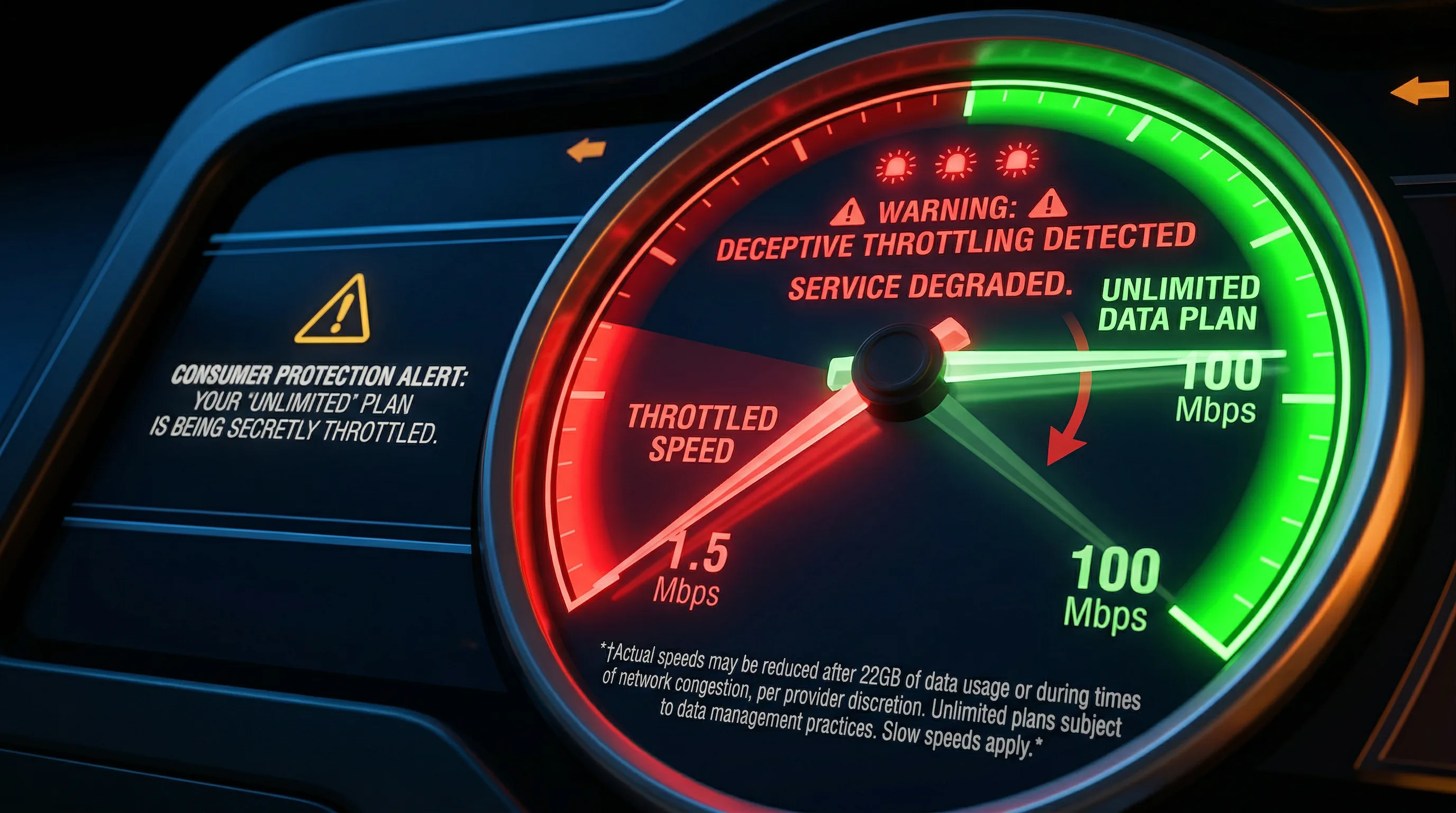
The Truth About 'Unlimited' AI Plans: How Hidden Throttling Wastes Your Money
The word "unlimited" in AI tool marketing almost never means unlimited. Behind the promise of boundless creativity lies a carefully engineered system of hidden throttling — speed reductions, model downgrades, and soft caps that kick in once you start actually using the tool at the volume you're...

The Artifio editorial team publishes research, tutorials, and release notes covering image, video, and audio generation models. All posts are reviewed by an editor before publishing.
The word "unlimited" in AI tool marketing almost never means unlimited. Behind the promise of boundless creativity lies a carefully engineered system of hidden throttling — speed reductions, model downgrades, and soft caps that kick in once you start actually using the tool at the volume you're paying for. If you've noticed your AI tool getting slower or producing noticeably worse output halfway through the month, you're almost certainly being throttled without knowing it.
This isn't a fringe problem affecting a handful of platforms. Community forums, Reddit threads, and social media are filled with creators who signed up for "unlimited" AI plans only to discover the fine print directly contradicts the marketing headline. Understanding how these practices work is the first step toward making smarter purchasing decisions and protecting your budget.
How "Unlimited" Plans Actually Work Behind the Scenes
Understanding the specific mechanics of throttling helps you spot it before you commit your credit card — or diagnose it if you're already experiencing mysterious slowdowns and quality drops.
Speed Throttling After Hidden Limits
The most common throttling mechanism is simple speed reduction. Your first 50 or 100 generations of the month are fast — impressively fast, designed to create a positive first impression during the honeymoon period. But cross an invisible usage threshold, and generation times balloon from seconds to minutes. Some platforms introduce queue systems that add 10-30 minute wait times during peak hours for users who've exceeded their hidden allocation.
This is deliberate engineering, not a technical limitation. The platform's infrastructure can't actually support truly unlimited usage at full speed for all subscribers simultaneously — that would be economically impossible. By throttling heavy users who are actually using the "unlimited" service as advertised, they maintain snappy performance for lighter users (who are the profitable majority) while keeping the "unlimited" marketing technically intact since they never actually block access.
The insidious part: throttling details often aren't documented anywhere in marketing materials or even the standard help documentation. They're buried in "fair use policies" or "acceptable use terms" that reference vague limits like "reasonable usage" without ever defining what "reasonable" means in concrete numbers. You won't find a threshold. You'll find a policy that gives the platform complete discretion to slow you down whenever they decide you're using "too much" of the unlimited service you're paying for every month.
Model Quality Downgrading
Some platforms employ an even more insidious throttling mechanism — they actually change the AI model serving your requests without telling you. After you exceed a hidden usage threshold, your prompts may be silently routed to a smaller, cheaper, less capable model that produces noticeably lower-quality output. The interface looks identical. Your prompts are exactly the same. The generate button works the same way. But the results are subtly — or sometimes not so subtly — worse in terms of coherence, creativity, and detail.
This is incredibly difficult to detect without careful, controlled testing where you compare outputs at different usage levels. Output might become more generic and formulaic, images less detailed and more repetitive, or text more prone to clichés and shallow analysis. Users typically blame their own prompts or assume the AI had a "bad day" rather than recognizing systematic quality downgrading tied to their usage volume.
The only reliable way to detect model downgrading is to compare output quality carefully across different usage levels within the same billing period. Run the same complex prompt early in the month at low usage and again later after heavy use. If you see a consistent quality difference, you're likely experiencing silent model switching.
Daily and Hourly Soft Caps
Even when monthly limits are technically "unlimited," many platforms impose daily or hourly soft caps that prevent efficient batch production. Generate 20 images in a focused hour? You might see a vague message about "high demand" requiring you to wait 15 minutes before continuing. Try batch-generating 50 blog post outlines in a productive day? Expect progressively slower response times that transform a productive session into an exercise in frustration.
These soft caps are designed to spread usage across the billing period, preventing infrastructure cost spikes. While this makes sense from an engineering and cost management perspective, it's fundamentally deceptive when sold under "unlimited" branding. An unlimited plan that prevents you from using the tool efficiently during a focused production session isn't unlimited in any meaningful sense for working professionals.
Real Examples of Deceptive AI Pricing Patterns
The patterns described below aren't specific to any single platform — they're industry-wide practices that should raise your guard whenever you evaluate any new AI tool subscription.
The Bait-and-Switch Pattern
The playbook is remarkably consistent across deceptive platforms: advertise "unlimited AI generations" prominently on the pricing page and in ads. Bury the throttling policy deep in the terms of service. Attract customers with boundless usage promises that match their ambitions. Then throttle anyone who actually uses the tool at real production volume. The math works because most subscribers never generate enough content to hit the throttle threshold — they're paying for unlimited but using moderate.
This bait-and-switch pattern is so widespread in the subscription software industry that FTC guidance on negative option marketing specifically addresses subscription practices that don't clearly and conspicuously disclose material limitations before the consumer commits to the transaction.
Dark Pattern Annual Billing
Many AI platforms default to annual billing at checkout, with the monthly option displayed in smaller text, a different color, or requiring an extra click to select. The annual price looks attractive — "Save 40%!" is hard to resist — until you realize you're locked into a 12-month financial commitment with a platform you've used for perhaps 20 minutes during a quick trial.
Some platforms make annual billing even stickier by offering a "money-back guarantee" for the first 7-14 days but engineering deliberately cumbersome refund processes — requiring email support tickets, phone calls during limited business hours, multi-step identity verification, or processing periods that conveniently extend past the guarantee window before you receive confirmation.
Feature Gating Behind Higher Tiers
The "unlimited" plan gives you unlimited access to the basic, older generation models. Want the current premium models that actually produce professional-quality output suitable for client work? That requires the Pro plan at a significant price jump. Need faster generation that doesn't waste your productive hours in queue? That's the Business plan. Want the legal right to use your creations commercially? Better check the Enterprise tier pricing.
This systematic tier-gating means the "unlimited" plan rarely delivers what you actually need for serious, professional content production. The marketing attracted you with the unlimited promise, but the features and models that make AI output genuinely useful for professional work live behind additional paywalls that effectively double or triple the marketed price.
What to Look For in Honest AI Pricing
Not all AI platforms play these games. Many legitimate platforms offer fair, transparent pricing that respects both your intelligence and your budget. Here's how to identify the good actors. For a full comparison framework, see our complete AI pricing guide.
Transparent Credit Systems
Credit-based pricing with visible, upfront costs per feature per model is the most honest pricing model currently available in the AI tool market. You can calculate your expected monthly spend before committing a single dollar. There are no hidden thresholds to discover mid-month, no throttling to diagnose, and no unpleasant surprises on your bill. The trade-off is that costs scale linearly with usage — but at least that scaling is fully predictable and visible before you generate anything.
Artifio uses a transparent credit system — every model's cost is listed upfront before you generate. No "unlimited" marketing spin, no hidden throttling mechanisms, no bait-and-switch tactics. You see what you'll pay and pay exactly what you see.
Clear Usage Limits
Paradoxically, clearly stated usage limits are significantly more honest than "unlimited" claims. A platform that states "200 generations per month on this plan" tells you exactly what you're getting for your money. You can evaluate whether 200 is enough for your workflow, calculate your precise cost per generation, and make an informed purchasing decision based on real numbers. Clear limits also make cross-platform comparison straightforward and meaningful.
No-Surprise Billing Practices
Honest billing means: monthly billing available without any penalty or price premium, easy self-service cancellation through the dashboard (not through support tickets), clear and timely trial-to-paid conversion email notices, no automatic tier upgrades, and transparent overage policies that you can understand before they apply. If canceling requires a phone call, that's a red flag. If the trial converts without a prominent email reminder at least 48 hours before charging, that's a red flag.
How to Evaluate AI Pricing Before You Buy
Before handing over your credit card to any AI platform, take these protective steps. For a complete evaluation checklist covering every angle, our guide to AI platform red flags covers nine critical warning signs every buyer should check.
Test at realistic production volume. A few casual test prompts during a free trial won't reveal throttling — that's by design. Generate content at the volume you expect to use in actual production. If that's 50 blog posts per month, try generating 15-20 during a single trial week. If the platform throttles during the trial, it will absolutely throttle when you're paying full price.
Read the terms of service carefully. Search specifically for "fair use," "acceptable use," "throttling," "rate limit," and "usage limit." If these terms appear paired with vague language like "reasonable usage" without concrete numerical definition, expect hidden caps to exist somewhere in the system.
Check community forums and reviews. Search Reddit, Twitter/X, and platform-specific community forums for reports of throttling, unexpected billing, or quality degradation over time. Real users share candid experiences that marketing materials will never reveal. Pay close attention to patterns — one complaint might be an isolated incident, but dozens of similar reports indicate systematic practices.
Calculate your expected cost per output. Even if a platform offers "unlimited" access, calculate what you'd pay per output on a credit-based alternative. You'll often find that transparent, per-generation pricing costs less than the "unlimited" plan — especially once you factor in the productivity losses from throttling-induced slowdowns and quality degradation. Our AI ROI calculator guide walks through this comparison analysis step by step.
Use a virtual card for trials. Prevent surprise charges by using a virtual credit card with a preset low spending limit for free trial sign-ups. If the platform attempts to charge more than the trial terms explicitly state, the virtual card will automatically decline the transaction. This protects you from aggressive auto-conversion billing without requiring you to remember cancellation deadlines perfectly. For more practical tips on managing AI spending, see our guide to AI credit systems.
Frequently Asked Questions
Are unlimited AI plans really unlimited?
Almost never. Most unlimited plans include hidden throttling mechanisms — reduced speed after a usage threshold, model quality downgrades, or soft daily caps. The term unlimited in AI marketing is largely deceptive, meaning no hard cutoff but with significant degradation after moderate use.
How do I know if my AI plan is throttled?
Signs of throttling include generation becoming significantly slower at certain times of the month, output quality noticeably dropping after heavy use, or longer wait times after sustained activity. Compare speeds and quality early in your billing cycle versus after significant usage to identify patterns.
What's better: subscription or credit-based AI pricing?
For most creators, credit-based pricing is more transparent and cost-effective. You pay for what you use, there is no throttling or waste, and costs are predictable based on your actual production volume rather than estimated tiers.
How do I avoid dark pattern billing in AI tools?
Read billing terms before subscribing. Check auto-renewal policies, annual versus monthly default selections, the cancellation process, and refund policies. Set calendar reminders before trial periods end. Use virtual cards for trials to prevent unauthorized charges.
What should I look for in AI tool pricing?
Transparent per-generation costs, no hidden throttling, a monthly billing option, easy self-service cancellation, clearly stated usage limits instead of fake unlimited claims, and the ability to calculate your expected costs before committing.
Choose Transparency Over Empty Promises
No hidden limits. No throttling. No bait-and-switch. Artifio's credit-based pricing is transparent by design — see every cost before you spend, and never wonder whether your output quality is being secretly degraded behind the scenes.